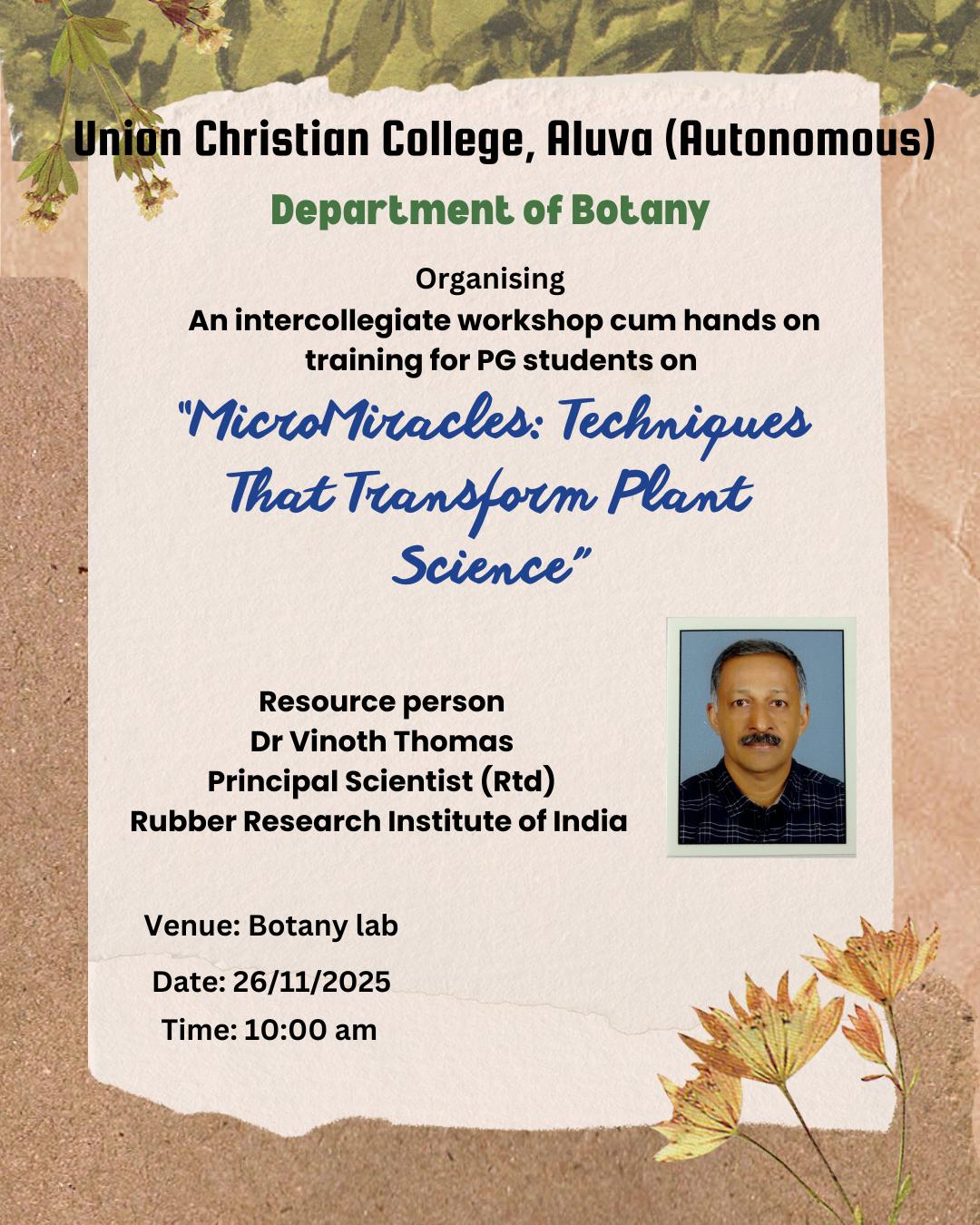
Event Name: Micro Miracles: Techniques That Transform Plant Science.
Date: 26 November 2025
Time: 10 am-3 pm
Venue: Botany Laboratory, Union Christian College, Aluva
Organised By: Department of Botany, U. C. College, Aluva
Participating Institutions: Union Christian College, Aluva and SNM College, Maliankara.
Resource Person: Dr. Vinoth Thomas, Retired Principal Scientist, Rubber Research Institute of India
2. Objective
The main objectives were:
3. Event Summary
A one-day hands-on intercollegiate workshop on Biological Specimen Preparation for Microscopy was conducted on 26 November 2025 at the Botany Laboratory of Union Christian College, Aluva. The programme aimed to equip post graduate level students with practical skills in preparing high-quality biological specimens for microscopic observation, thereby strengthening their laboratory competencies and scientific understanding.
The session began with a brief inaugural address by the faculty of the Botany Department, highlighting the importance of microscopy in biological sciences. PG Students from SNM College, Maliankara also joined the event, making it an enriching inter-institutional learning experience.
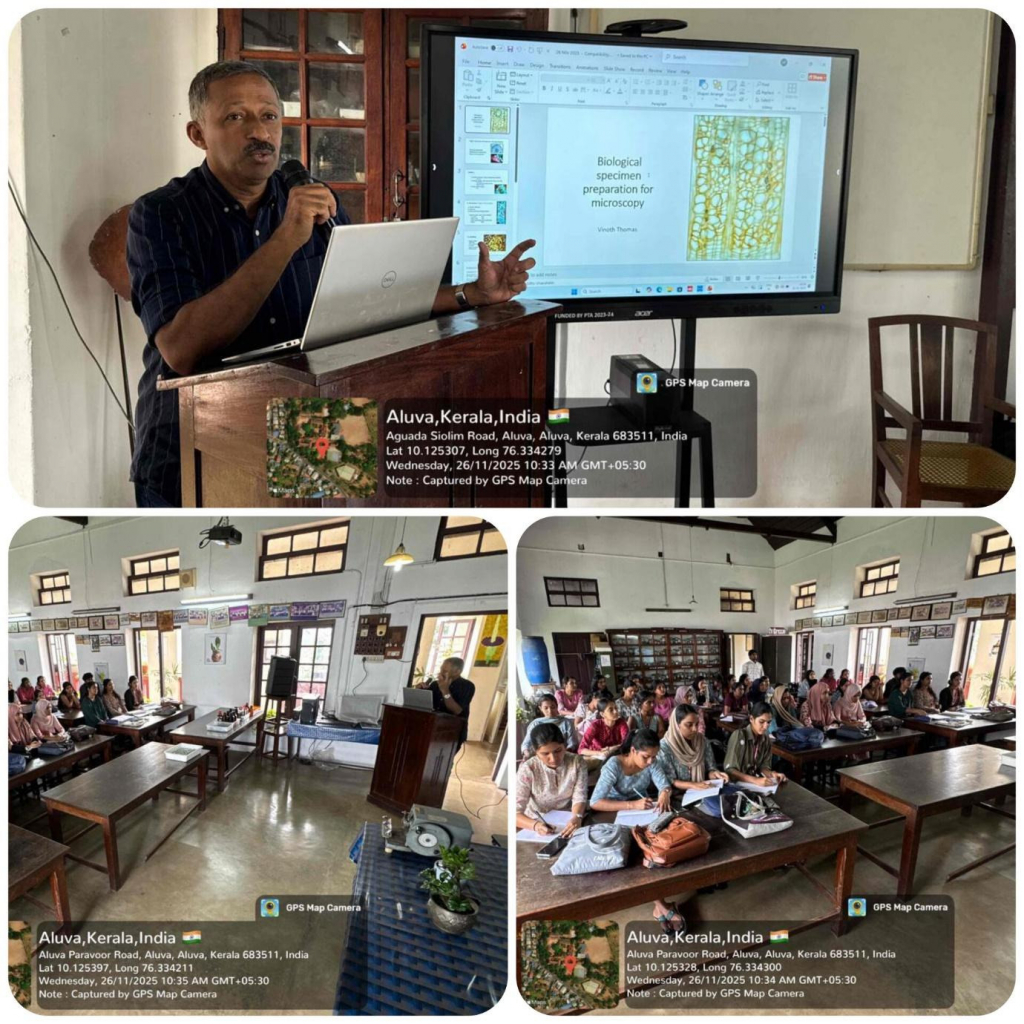
The workshop was led by Dr. Vinoth Thomas, an eminent researcher and retired Principal Scientist from the Rubber Research Institute of India. He introduced participants to the fundamentals of microscopy, emphasizing the importance of precision and technique in slide preparation.
4. Highlights
Dr. Thomas demonstrated various specimen preparation techniques including:
Students actively participated in the hands-on sessions, working individually and in small groups to prepare slides from plant tissues. Dr. Thomas provided step-by-step guidance, clarified doubts, and shared valuable tips drawn from his extensive research experience.
5. Outcome/Impact
The workshop successfully enhanced the practical skills of the participants. Students gained:
Both institutions appreciated the collaborative nature of the programme, which fostered peer learning and scientific curiosity among students.
6. Feedback
The participants responded enthusiastically to the workshop, expressing that the practical demonstrations were clear, engaging, and easy to follow. Students appreciated the opportunity to work directly with advanced laboratory equipment and to receive personal guidance from an experienced scientist like Dr. Vinoth Thomas. Many remarked that the workshop deepened their interest in microscopy and improved their confidence in laboratory skills. Teachers accompanying the students also commended the well-organized structure of the programme and the supportive environment provided by the Botany Department.
7. Photos
8. Acknowledgements
This programme was organised and executed under the guidance of Dr. Justin R. Nayagam, Head of the Department of Botany, whose vision, coordination skills, and constant support were crucial in the successful conduct of the workshop. The department gratefully acknowledges his leadership throughout the planning and implementation of the event.
Sincere appreciation is also extended to the faculty members, non-teaching staff, and students of the department for their wholehearted cooperation and dedicated efforts, which ensured the smooth and efficient running of the programme.
A special note of gratitude goes to the first and final year M.Sc. Botany students, who undertook numerous responsibilities—including arrangements, publicity, refreshments, scoring, photography, and videography—with remarkable discipline, maturity, and teamwork. Their commitment and selfless service greatly contributed to the success of the workshop, and the department takes immense pride in their exemplary performance.